Mealybugs – the cause of undersized dragon fruit, rotting bracts and young fruit drop
Mealybug damage on dragon fruit is becoming a major problem in specialised growing areas, especially in the rainy season and during fruit development. Mealybugs settle on fruit bracts, stalks, branch bases and the root collar, sucking sap and causing deformed fruit, dry bracts, black spots – loss of market value and failure to meet export standards.
Signs of mealybugs on dragon fruit
| Affected site | Specific symptoms |
|---|---|
| Fruit bracts (young bracts) | Cotton-like white film on bracts, bracts dry black and curl |
| Fruit stalks | Slight swelling, sweet secretion → attracts ants, sooty mould spreads |
| Old branches – root collar | Mealybugs in clusters, slightly rough skin, yellowing above |
| Soil around the base | Shelter for root mealybugs, damp, many black ants climbing up |
In particular, mealybugs are very hard to detect early because they hide well, are small and covered with a thick white wax.
Serious damage caused by mealybugs on dragon fruit
- Fruit is deformed, undersized, light and unevenly coloured
- Bracts dry and warp – clearly reducing marketability
- Sooty mould from honeydew → blackened fruit skin
- Higher young fruit drop of 15–30%, especially after heavy rain
- Spreads quickly across the orchard if not detected and treated in time
Conditions favouring mealybugs on dragon fruit
- Rainy season – high humidity – alternating sun
- When fruit is growing (10–20 days after set)
- When young bracts keep developing, mealybugs settle and suck sap
- Weedy, overly dense orchards with poor ventilation
✅ Managing mealybugs on dragon fruit effectively
1. Inspect regularly – focus on bracts & stalks
- Inspect carefully in the early morning (when mealybugs cling close and are easy to see)
- Check young bracts, bract bases, branch bases and post roots
2. Use a targeted product that penetrates – systemic throughout the plant
Technical suggestion:
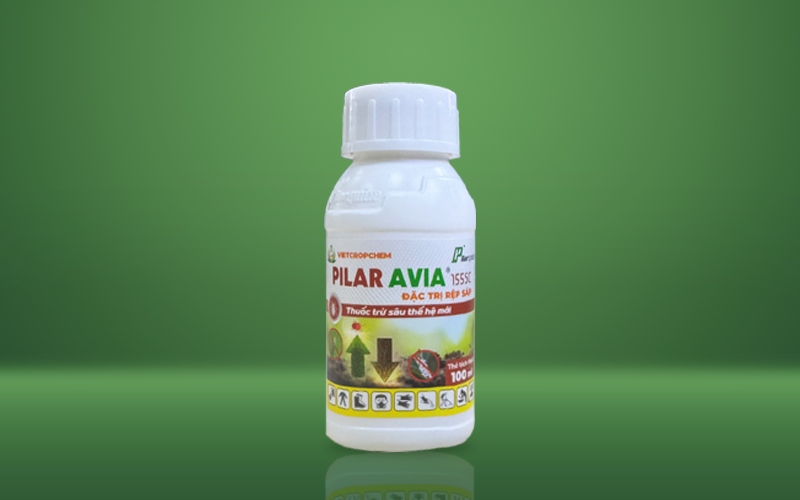
Pilaravia 155SC – two-way systemic - for mealybug control: https://vietcropchem.com/san_pham/PILARAVIA-155SC
3. Combine with Viet-up 90 for better adhesion and penetration
- Helps the product adhere to the mealybug wax layer, limiting wash-off in rain
- Increases mealybug control efficacy by up to 30–40%
4. Prune more – clean the base – control ants
- Remove old and diseased branches
- Keep the base dry and ventilated
- Control black ants (mealybug allies) with biological baits
Dragon fruit mealybug programme with Pilaravia 155SC
| Goal | Specific instructions |
|---|---|
| Treat on first appearance | 25ml Pilaravia + 15ml Viet-up 90 / 25L water – spray evenly over the whole canopy |
| Severe cases | Repeat after 5–7 days |
| Routine rainy-season prevention | 15ml Pilaravia + 10ml Viet-up 90 / 25L – every 14–20 days |
| Mechanical measures | Trim infested bracts, collect and dispose of them properly |
Conclusion
Mealybugs on dragon fruit are a main cause of blemished, light, early-dropping fruit, directly affecting output and price. Controlling them early with a systemic product such as Pilaravia 155SC, together with suitable care practices, is an effective – sustainable – economical way for growers to protect their orchards.
Read next: Mealybugs "hiding" on rambutan, longan and jackfruit: How to manage them?
SEO keywords used in this article
- Main keyword: rệp sáp thanh long
- Secondary keywords: tai trái khô, thuốc trị rệp sáp tai thanh long, Pilaravia 155SC, rệp sáp cuống trái thanh long #RepSapThanhLong #Pilaravia155SC #TaiTraiKho #ThuocTriRep #NongSanChatLuong #Vietcropchem