Mealybugs – a silent attacker causing heavy losses for farmers
Mealybugs is the common name for insects in the family Pseudococcidae. They live on crops and suck plant sap, causing weakened growth, fruit drop and plant death, and are vectors of several dangerous fungi and viruses.
Mealybugs hide very well in leaf sheaths, roots, fruit stalks and stem bases... so they are hard to detect early and hard to control fully without the right technical knowledge.
Morphology and biology of mealybugs
| Criterion | Description |
|---|---|
| Size | 1–5 mm, oval, soft, wingless |
| Colour | Opaque white, light pink or grey, covered with a cotton-like wax layer |
| Feeding sites | Young leaves, fruit stalks, basal sheaths, root collar, leaf undersides |
| Reproduction | Very fast – one individual can produce hundreds of eggs per batch |
| Life cycle | 3–5 weeks, can reproduce sexually or asexually |
How mealybugs cause damage
- Continuous sap sucking → weakens the plant quickly
- Sweet secretions → cause sooty mould (black leaves, reduced photosynthesis)
- Transmit dangerous viruses → for which there is no specific cure
- Symbiosis with black ants → ants protect mealybugs, which spread faster
Which crops in Vietnam do mealybugs attack?
| Crop | Typical damage |
|---|---|
| Durian | Mealybugs on the base and flower stalks → flower drop, shoot dieback |
| Mango | Mealybugs under leaves and on fruit stalks → small fruit, mass drop |
| Coffee | Mealybugs at the root collar → yellow leaves, dry branches |
| Pepper | Mealybugs on roots + lower stem → plant dies |
| Dragon fruit | Mealybugs on fruit bracts → misshapen fruit, fails to grow, young fruit drop |
| Rambutan, longan, jackfruit | Mealybugs on flowers and fruit → skin lesions, fruit below market grade |
Conditions that favour rapid mealybug development
- Rainy season, high humidity – mealybugs thrive in damp conditions
- Dense planting, poor ventilation
- Excess nitrogen → many young shoots, which mealybugs prefer
- No clearing of weeds at the base or diseased plant residue
Economic damage caused by mealybugs
- 20–40% reduction in fruit yield
- Higher flower drop and young fruit drop
- Continuous spraying needed if not controlled in time
- In some cases plant death (coffee, pepper, durian seedlings)
Advice from Vietcropchem specialists
- Monitor closely during flushing and flowering – when mealybugs often thrive
- Check the base, sheaths and leaf undersides, even if none are visible in the canopy
- Treat as soon as the first signs appear
- Combine a two-way systemic product + a sticker adjuvant
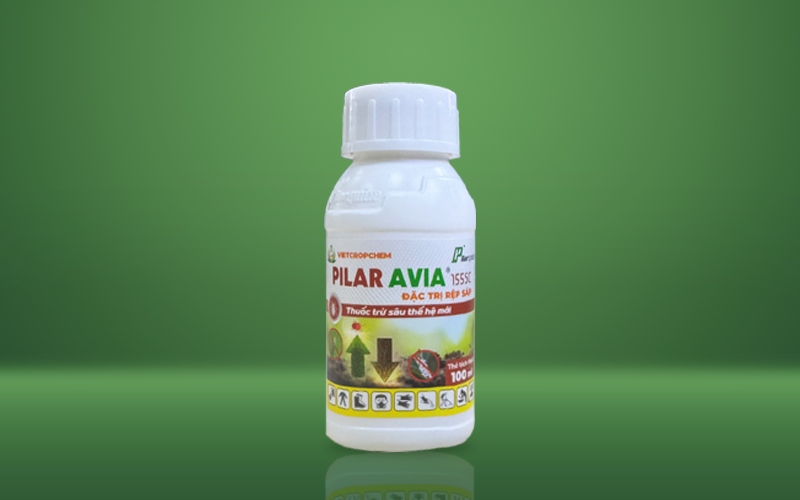
See the solution: Pilaravia 155SC - two-way systemic - for mealybug control: https://vietcropchem.com/san_pham/PILARAVIA-155SC
Conclusion
Mealybugs are not just ordinary "sap suckers" – they are a broad threat to crop health, yield and the farm ecosystem. Understanding their characteristics, behaviour and development conditions is needed for a management strategy that is timely – technically correct – cost-effective.
Read next: Mealybugs on durian: Detect early to avoid crop loss
SEO keywords used in this article
- Main keyword: rệp sáp
- Secondary keywords: rệp sáp là gì, vòng đời rệp sáp, rệp sáp trên cây trồng, rệp trắng, rệp gốc cây, rệp sáp truyền bệnh #RepSap #SauHaiCayTrong #PhongTruSauBenh #Vietcropchem #Pilaravia155SC #NongDanThongThai